

By 2030, the number of active satellites orbiting Earth could exceed 100,000, a dramatic leap from just 1,000 in the early 2000s. The shift is driven by the rise of mega-constellations — massive fleets of satellites launched by companies like SpaceX, Amazon, OneWeb, and China’s Guowang.
For thousands of years, humans have looked to the night sky for navigation, inspiration, and scientific understanding. But over the past few years, something unusual has been unfolding above us. The once-dark canvas of stars is now peppered with moving lights — satellites. And this transformation isn’t slowing down.
While these networks promise global internet access, navigation improvements, and enhanced Earth monitoring, they’re also creating major concerns: sky brightness, space pollution, astronomical interference, and even collision threats.
This blog explores the growing satellite boom, its impact on the night sky, and what the future might look like.
1. The Satellite Explosion: How Did We Get Here?
Humanity has launched satellites for decades, but the pace was slow and controlled — until recently.
What changed?
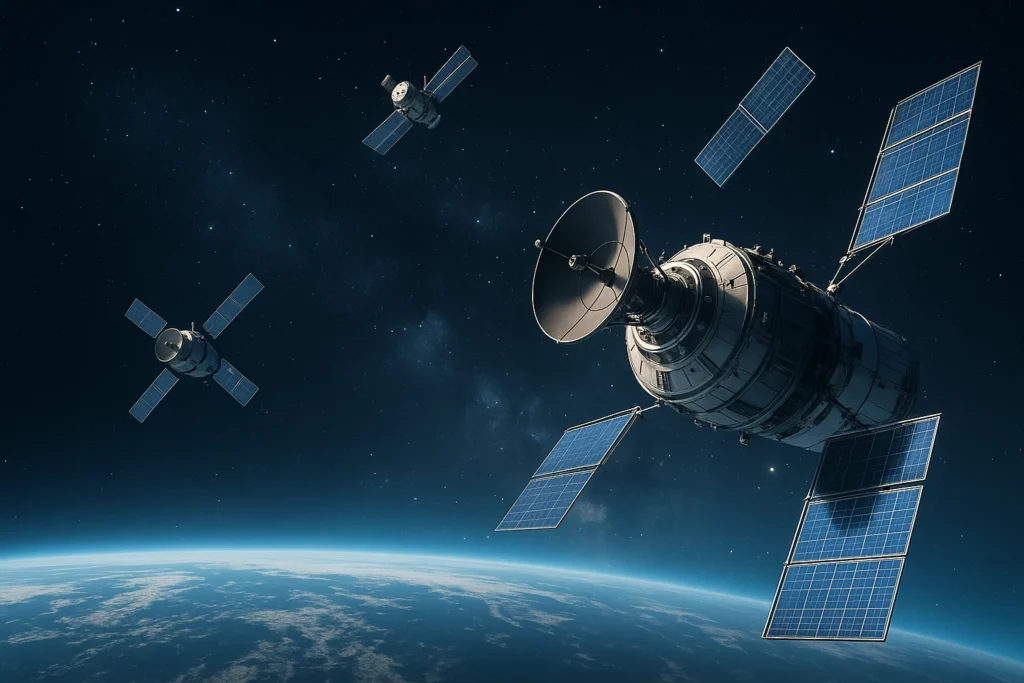
The Shift to Mega-Constellations
The new generation of satellites is:
- Smaller (weighing only 200–300 kg)
- Faster to manufacture
- Cheaper to launch
- Equipped with modern communication systems
Companies realized they could deploy hundreds or thousands of them to create global internet networks. This business model has fueled a rapid, unprecedented rise in launches.
The Numbers Tell the Story
- In 2010: ~900 operational satellites
- In 2020: ~3,300
- In 2024: ~9,000+
- By 2030: 100,000+ satellites expected
It’s not just SpaceX — although they are the largest contributor. Amazon’s Project Kuiper, OneWeb, Telesat, and multiple national programs plan aggressive expansions.
2. Why So Many Satellites? The Benefits Are Real
Even though the sky is getting crowded, mega-constellations exist for valid reasons.
Global Internet Coverage
Large portions of Africa, Asia, South America, and rural areas worldwide lack reliable internet. Satellites fill this gap by:
- Providing broadband to remote regions
- Supporting natural disaster zones
- Improving global communication networks
Better Navigation and Earth Observation
More satellites mean:
- Enhanced GPS accuracy
- Faster emergency response
- Improved climate and environmental monitoring
- Better agricultural insights
- More accurate weather forecasting
Cheaper Space Access
Reusable rockets like SpaceX’s Falcon 9 have drastically reduced launch costs, making satellite networks financially viable.
3. The Dark Side: How Satellites Are Ruining the Night Sky
Now comes the concerning part — the reason astrophysicists and stargazers are worried.
Increased Sky Brightness
Satellites reflect sunlight. When thousands orbit Earth:
- The night sky becomes brighter
- Fainter stars become difficult to observe
- Long-exposure astronomy gets disrupted
What once looked like a deep black sky now has streaks and glints of moving metal objects.
Astronomy Is Suffering
Telescopes like:
- Hubble
- Vera Rubin Observatory
- James Webb
all face challenges from satellite streaks across images. These trails pollute photos, making it harder to study galaxies, dark matter, comets, and near-Earth asteroids.
Starlink Is the Biggest Contributor
SpaceX’s Starlink satellites are among the most reflective. Despite efforts to dim them, the growth rate of launches far exceeds the improvements in brightness reduction.
4. Space Junk: An Orbital Minefield
Aside from brightness, the real threat lies in space debris.
With tens of thousands of satellites in low orbit (LEO), the risk of collisions increases dramatically.
The Domino Effect: Kessler Syndrome
A collision creates debris.
Debris hits other satellites.
Those break apart.
More debris spreads.
This chain reaction could eventually make parts of space unusable — a serious risk.
Recent Close Calls
- Starlink satellites have had thousands of near misses with other objects.
- ESA once manually maneuvered a satellite to avoid Starlink collision.
- China reported multiple “dangerous encounters” with Starlink satellites.
The more satellites we add, the tighter and more dangerous space becomes.
5. Astronomy vs. Satellite Companies: A Growing Conflict
Astronomers globally have raised alarms.
Their Concerns Include:
- Distorted telescope data
- Loss of deep-sky visibility
- Harder detection of potentially hazardous asteroids
- Increased long-term light pollution
Companies Are Responding, But…
Initiatives like dark coatings, visor shielding, or lower orbits help — but not enough to offset the scale of the problem.
As one astronomer put it:
“You can dim every satellite, but you can’t dim 100,000 of them.”
6. Environmental & Cultural Impact
Environmental Risks
- Satellite launches emit pollutants
- Debris re-entry releases toxic particles
- Rocket fuel affects the ozone layer
Cultural Impact
For thousands of years, humanity has relied on the stars for:
- Navigation
- Science
- Mythology
- Art
- Exploration
Losing the natural night sky means losing part of human history — and our connection to the universe.
7. Are 100,000 Satellites Too Many? What Experts Say
Professional bodies like:
- The International Astronomical Union (IAU)
- UNESCO
- Space agencies
have suggested regulating satellite numbers and managing debris carefully.
Potential Solutions
- Stricter orbital management
- Reflectivity standards
- Debris-removal systems
- International satellite traffic control
- Fewer but more powerful satellites
But these solutions require global cooperation — something that has yet to materialize.
8. Quick Data Table: Satellite Constellations in Numbers
| Network / Project | Current Satellites | Planned Total | Orbit Level | Purpose |
| SpaceX Starlink | ~6,000+ | 42,000 | Low Earth Orbit | Internet |
| Amazon Kuiper | ~100 | 3,236 | LEO | Internet |
| OneWeb | ~648 | 6,372 | LEO | Internet |
| China Guowang | ~150 | 13,000 | LEO | Internet |
| Various Small Providers | ~500 | 10,000+ | Mixed | Telecom / Imaging |
| Projected Total by 2030 | ~9,000+ now | 100,000+ | — | Global coverage |
9. What Happens If We Cross 100,000 Satellites?
Best-Case Scenario
- Planet-wide internet access
- Better data networks
- Improved environmental monitoring
- Faster global communication
- Advanced scientific analytics
Worst-Case Scenario
- Brightened sky everywhere
- Astronomical research becomes extremely difficult
- Higher collision risk
- Permanent orbital debris fields
- Space becomes commercially dominated with little regulation
The truth likely lies somewhere in between — but the risks cannot be ignored.
10. What Can Be Done to Protect the Night Sky?
1. Global Policy and Regulation
Agencies like the UN and ITU may introduce:
- Limits on satellite brightness
- Debris cleanup laws
- International traffic management systems
2. Technological Innovations
Companies can:
- Add anti-reflective coatings
- Launch fewer satellites per function
- Use improved orbital planning
3. Public Awareness
People everywhere should know how quickly the sky is changing — and why it matters.
11. Final Thoughts: Are We Losing the Night Sky Forever?
We are living in a defining moment in space history.
The move from a few thousand satellites to more than 100,000 is transforming the cosmos in real time.
Yes, satellites bring remarkable benefits — global connectivity, scientific insights, and economic growth. But the downside is significant: light pollution, orbital clutter, environmental effects, and the disappearance of the natural night sky.
What we choose to do next will determine whether future generations inherit a sky filled with stars — or filled with moving dots of artificial light.
Humanity must find a balance between innovation and preservation. If we don’t, the night sky we’ve known for millennia may soon become a memory.