
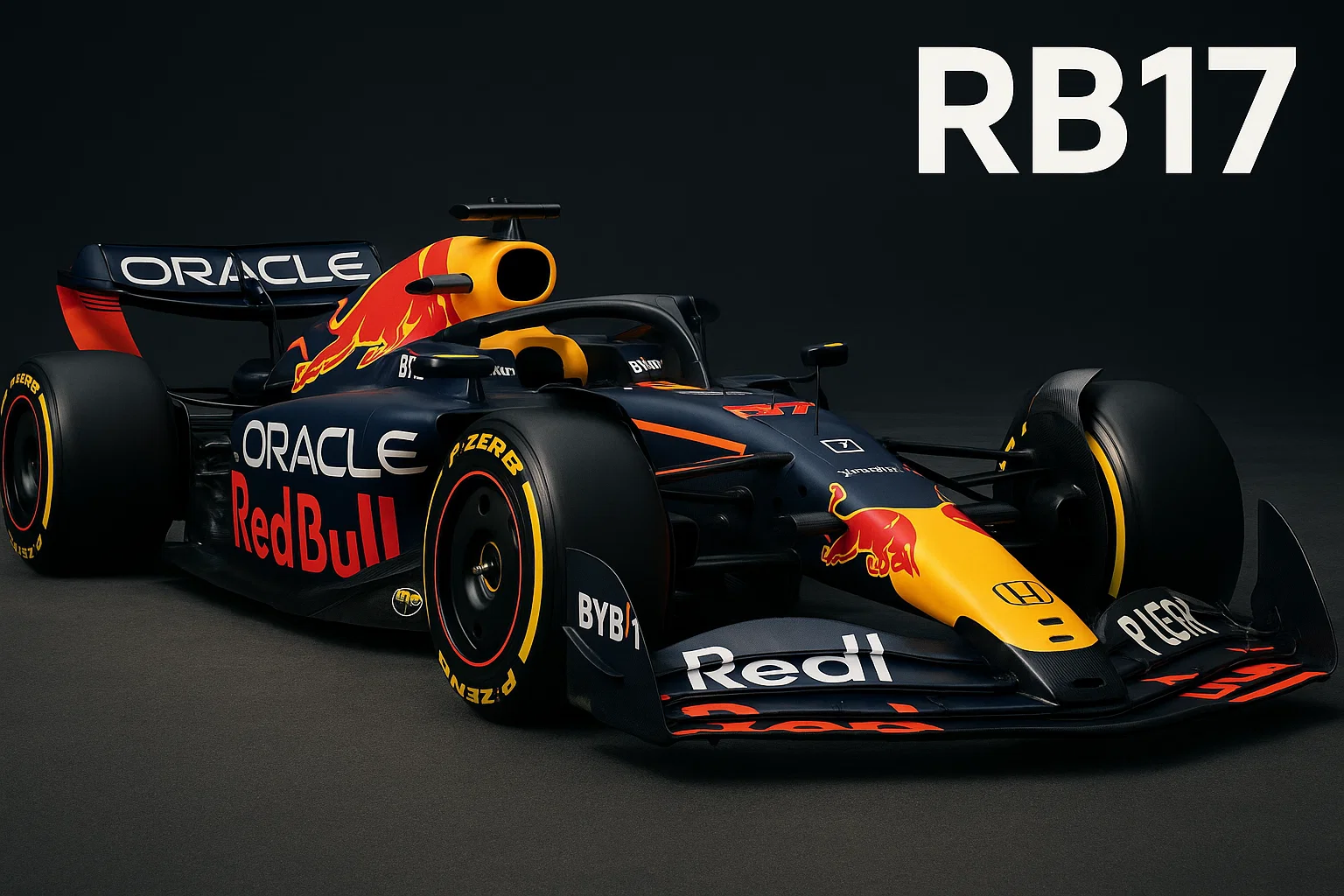
When Red Bull announced the RB17 hypercar, the automotive world stopped and stared. After dominating Formula 1 for years, the brand—along with legendary designer Adrian Newey—decided to build a road-going machine that captures the pure DNA of an F1 car. The RB17 is not just a hypercar; it is Red Bull’s bold attempt to build a real-life Formula 1–style experience for a very exclusive group of drivers.
With only 50 units planned for production and a price tag exceeding £5 million, the RB17 is positioned as a track weapon built without compromises. But what makes it so special? Why is the world calling it the most “F1-like hypercar ever built”? And does it really justify the hype?
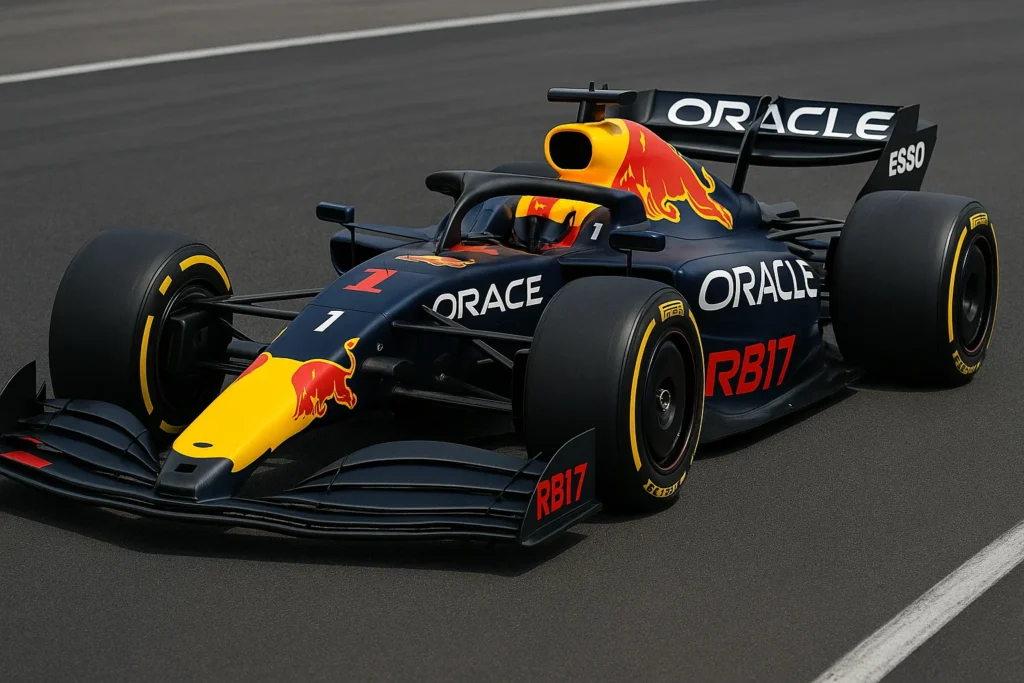
This in-depth blog explores everything — design, engineering, performance, aerodynamics, interiors, tech, and the vision behind Red Bull’s first hypercar.
The Birth of the RB17
The RB17 marks an extraordinary milestone: the first car fully developed by Red Bull Advanced Technologies (RBAT). Instead of relying on an engine manufacturer or external design studio, the company built the RB17 from scratch, relying heavily on the technical expertise that has powered Red Bull Racing to multiple F1 World Championships.
The number “17” fills an important gap. Red Bull’s F1 cars have used chassis names from RB1 to RB16B and then RB18 onward. The RB17 was skipped in Formula 1 because of major regulation changes in 2021. Red Bull decided to reserve this special number for something unique — a hypercar that embodies the philosophy of their best race machines.
The result is an engineering masterpiece intended for elite track drivers who seek something beyond Ferrari, Porsche, McLaren, and even the Aston Martin Valkyrie.
Design Philosophy: Pure Racing DNA
The RB17 looks like it was sculpted by speed itself. Adrian Newey, often called the greatest aerodynamicist in F1 history, delivered a shape that eliminates unnecessary elements and focuses entirely on performance.
A Track-First Design
This is not a car designed for public roads or comfort. Red Bull openly states that the RB17 is built specifically for the track, which means:
- No compromises for road regulations
- No restrictions on noise, ground clearance, or emissions
- Aerodynamics similar to a Formula 1 or Le Mans Hypercar
- Safety structure equivalent to racing standards
Carbon-Fiber Monocoque
At the core lies a lightweight, extremely rigid carbon-fiber tub. This chassis ensures maximum structural integrity and forms the foundation for extreme aerodynamic features like tunnels under the car.
Aggressive Exterior Styling
The RB17 features:
- A razor-sharp front wing
- Sculpted bodywork that channels air effectively
- A massive rear diffuser
- Vertical and horizontal wings
- A sleek cabin resembling single-seater cockpit spacing
Its design is less about looking beautiful and more about achieving record-breaking lap times.
Yet, paradoxically, the RB17 does look beautiful — in a menacing, race-machine way.
Aerodynamics: The New Benchmark
If there is one area where the RB17 completely eclipses other hypercars, it’s the aero package. Adrian Newey designed the car using the same philosophy and tools used for Red Bull’s F1 machines.
Ground Effect Dominance
The RB17 generates huge portions of its downforce through ground effect, achieved via large underbody tunnels. This creates suction that pulls the car close to the track surface, improving stability and grip.
Active Aero
Unlike F1 cars, the RB17 is allowed to use advanced active aerodynamics. This includes:
- Active wings
- Adjustable underbody components
- Electronically controlled aero flaps
These components dynamically adjust the car’s behavior based on speed, cornering, and braking.
Downforce Numbers
Though Red Bull has not released exact figures, early estimates suggest:
- Over 4,000 kg of downforce at high speeds
- Nearly double what most hypercars produce
- On par with Le Mans Prototype race cars
This level of downforce means the RB17 can corner at g-forces unimaginable in any road-legal car.
Engine and Performance: V10 Hybrid Fury
Now comes the most exciting part: the powertrain.
Red Bull Advanced Technologies collaborated with Cosworth to develop a high-revving naturally-aspirated V10 engine paired with a hybrid system. This is a rare combination in today’s turbocharged world.
Engine Specifications (Expected)
- 6.5L V10 engine from Cosworth
- Revs up to 10,000+ RPM
- Hybrid electric boost system
- Combined power output of 1,100+ horsepower
- Rear-wheel drive
- Lightweight, compact, and track-optimized
This configuration is chosen for one reason: driving emotion.
Where turbo engines lack soul, a V10 delivers a screaming symphony. The hybrid motor fills torque gaps and improves throttle response.
Top Speed and Acceleration
While official numbers aren’t out, experts predict:
- 0–100 km/h in ~2.0 seconds
- Top speed exceeding 350 km/h
- Cornering speeds similar to F1 at select tracks
The RB17 might not beat F1 around a full Grand Prix circuit, but on shorter technical tracks, it could come surprisingly close.
Chassis and Suspension: Built for Precision
The RB17 uses a cutting-edge suspension system that borrows technology from modern open-wheel racing.
Key Highlights
- Push-rod suspension (likely front and rear)
- Adaptive damping for optimal grip
- Extremely stiff anti-roll structures
- Custom-developed springs and dampers
- Weight distribution engineered for perfect balance
The car is built to deliver predictable behavior at extreme speeds.
Tyres
The RB17 runs on bespoke Michelin racing slicks designed exclusively for this car. These tyres:
- Provide enormous mechanical grip
- Offer fast warm-up
- Are optimized for repeated high-g braking
Drivers will need to change tyres frequently—just like race teams—because performance comes first.
Interior: Minimalistic Track Cockpit
If you expect luxury leather seats or infotainment screens, the RB17 is not for you.
The interior is pure business:
- Two lightweight seats, arranged closely like a narrow cabin jet
- F1-inspired steering wheel with integrated data display
- Minimal switches focused on driving control
- Six-point racing harnesses
- Full roll-cage safety compliance
The cockpit is functional, efficient, and performance-oriented.
Yet, Red Bull offers limited customization, including upholstery material, seat size, and cockpit color.
Technology and Data Systems
The RB17 is packed with motorsport-grade technology:
Telemetry System
Drivers receive a full suite of data similar to F1, including:
- Real-time lap delta
- Tyre temperature
- Brake performance data
- Energy deployment statistics
- Aero load mapping
Owners can analyze data after every session, just like an F1 driver reviewing performance with engineers.
Driver Training and Support
Red Bull offers each owner:
- Access to professional race engineers
- Track-day support
- Simulation sessions
- Driver coaching
- Maintenance by Red Bull technicians
This makes the RB17 more than a car — it’s a complete racing ecosystem.
Ownership Experience: Ultra-Exclusive
Only 50 RB17 units will be produced. Each one will be hand-built in Red Bull’s Milton Keynes facility.
Owners get:
- Exclusive track events
- Direct interaction with Red Bull Racing engineers
- Factory-level service support
- Potential access to F1-style hospitality
- A rare piece of Adrian Newey’s final masterpieces before retirement
This car is targeted at elite collectors who already own brands like Bugatti, Koenigsegg, and Pagani — but want something more raw, more extreme, and more connected to Formula 1.
Comparison: How RB17 Stands Against Competitors
Vs. Aston Martin Valkyrie
- RB17 is more track-focused
- Newer aerodynamic systems
- More advanced hybrid integration
- Similar Newey design influence (but RB17 is his pure version)
Vs. Mercedes AMG One
- RB17 has a high-revving V10 vs. hybrid F1 engine
- AMG One is road-legal; RB17 is not
- RB17 expected to be faster on track
Vs. Ferrari SF90 XX
- RB17 is significantly more extreme
- Ferrari is semi-road-legal; RB17 is track-only
- Downforce advantage goes to RB17
Vs. Bugatti Bolide
- Bolide focuses on speed
- RB17 focuses on cornering and racing purity
In simple words:
RB17 is the closest thing you can buy to a Formula 1 car without actually being in Formula 1.
Why the RB17 Matters
The RB17 is more than a car — it is a statement.
It represents:
- The culmination of Adrian Newey’s career
- Red Bull’s engineering identity beyond F1
- A new chapter in hypercar evolution
- A technological bridge between racing and private track machines
Its creation proves that a racing team can build a hypercar to rival (and possibly surpass) traditional automotive giants.
Conclusion: The Red Bull RB17 Sets a New Standard
The RB17 is not made for mass production, daily use, or even road approval. It is designed to be the ultimate track weapon — a machine where engineering is pushed to the absolute limit.
If you’re a car enthusiast, the RB17 symbolizes everything thrilling about internal-combustion engineering combined with hybrid power. If you’re a collector, it’s one of the rarest and most exclusive machines ever built. And if you’re a racing fan, it’s the closest you’ll ever get to driving an Adrian Newey Formula 1 creation.
Hypercar performance will never be the same again.
The RB17 isn’t just another vehicle — it’s the future of track performance.