
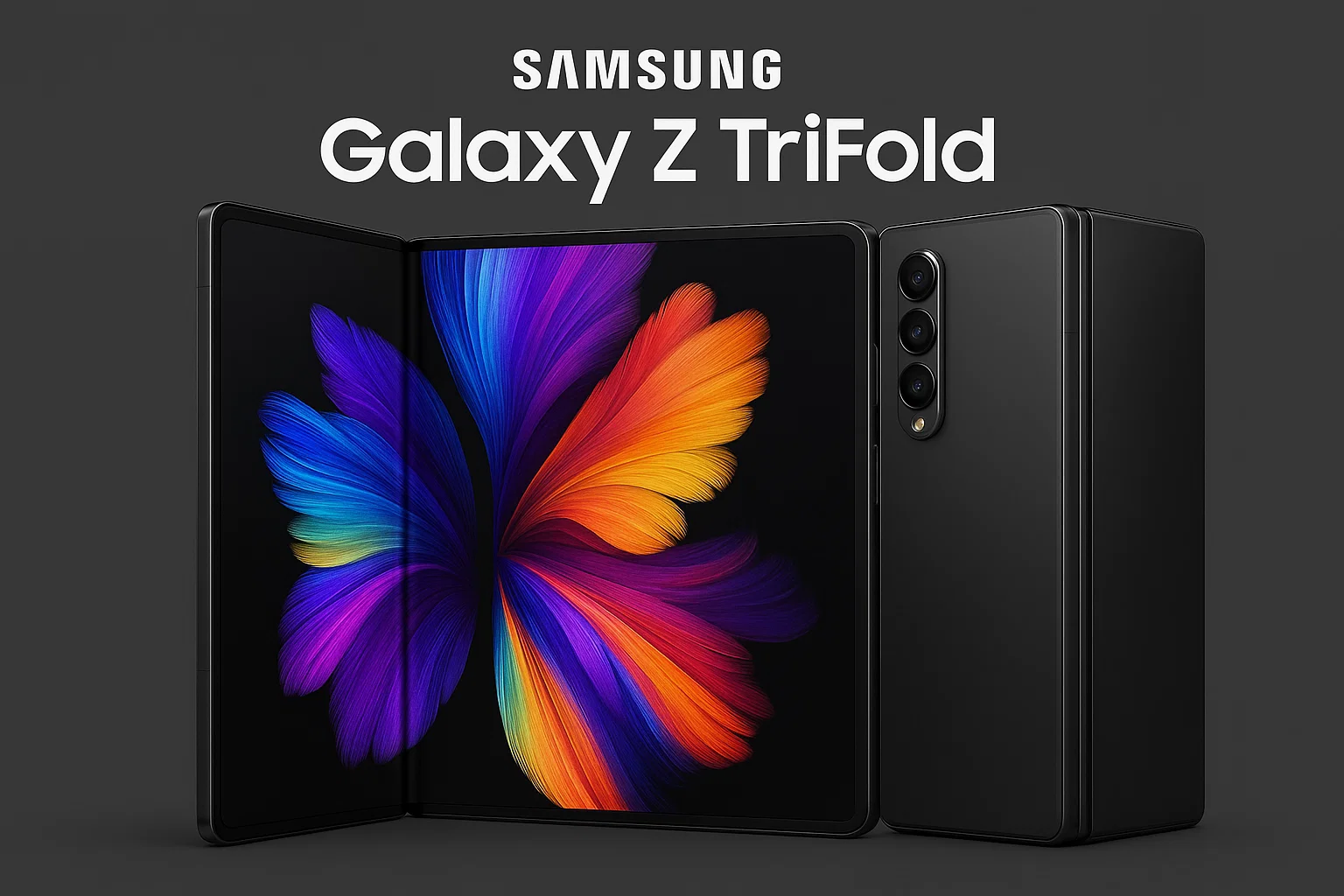
Foldable smartphones have rapidly evolved over the past few years—moving from experimental tech to mainstream devices. But Samsung, the brand that helped define the foldable category, is now preparing to take an even bigger leap. Enter the Samsung Galaxy Z TriFold, a device that transforms not once, but twice, unfolding into an expansive tablet-sized display.
The TriFold phone isn’t just another iteration of the Galaxy Z Fold lineup; it represents a new category of mobile computing—one where a single device can function as a smartphone, a tablet, and a mini-laptop replacement. With Samsung’s mastery in foldable AMOLED technology, multi-hinge engineering, and AI integration, the TriFold is expected to become one of the most futuristic consumer gadgets ever built.

In this blog, we dive deep into the Z TriFold’s design, expected performance, features, use cases, engineering challenges, and what it means for the future of foldables.
1.The Concept Behind the TriFold Device
Samsung’s journey started with the Galaxy Fold, which introduced the world to a book-style foldable. Then came the Galaxy Z Flip, redefining portability with a clamshell design. The next step is logical yet revolutionary:
a device that unfolds across two hinges, creating a triple-display expanse.
The TriFold aims to:
- Blur the line between phone, tablet, and laptop
- Serve professionals, content creators, and gamers
- Maximize display real estate without increasing pocket size
- Showcase Samsung’s leadership in flexible OLED technology
The idea is simple: one device that does everything.
2. Design: Three Panels, One Seamless Device
The centerpiece of the Galaxy Z TriFold’s design is its dual-hinge mechanism, allowing the device to unfold like a brochure. When closed, it resembles a thick smartphone. When unfolded, it becomes a near-tablet.
Key Structural Highlights
- Dual Ultra-Thin Glass (UTG) layers
- Reinforced Titanium Flex Hinges on both sides
- Flexible AMOLED 3X Infinity Display
- Water and dust protection enhancements
- Rounded, ergonomically balanced chassis
The hinges remain the most complex part of the engineering—Samsung must ensure both durability and smooth operation across thousands of folds.
3. Display Technology: A Tablet in Your Pocket
Samsung’s foldable screens have always been industry-leading, and the TriFold display takes this further.
Expected Display Specs
- Triple-section 12.4-inch unfolded AMOLED (approx.)
- HDR10+ support
- Adaptive 1–120 Hz refresh rate
- High brightness for outdoor usability
- S Pen support for notes, drawing & multitasking
The magic lies in how seamlessly the panels merge, creating a large canvas ideal for productivity and entertainment.
4. Performance: Powering a Three-Screen Monster
To handle such a large interface and heavy multitasking, the Galaxy Z TriFold is expected to pack flagship-tier internal hardware.
Expected Hardware:
- Snapdragon 8 Gen 3 / Exynos equivalent
- 16 GB RAM (minimum)
- 512 GB or 1 TB storage
- AI-powered performance optimization
- Large vapor-chamber cooling system
Samsung is likely to emphasize efficiency and heat management, given the expanded screen area and heavier app usage.
5. Multi-Tasking: Built for Power Users
This is where the Z TriFold truly shines.
Possible Multi-Tasking Features
- Up to four apps running simultaneously
- Resizable windows & floating pop-ups
- Dedicated desktop mode when unfolded
- Enhanced drag-and-drop
- Split keyboard for comfortable typing
Professionals could edit a document, open spreadsheets, take notes with S Pen, and join video meetings—all from one device.
6. Camera System: Flexibility Meets Creativity
Because of its folding nature, the TriFold may adopt multi-lens setups on one side, doubling as a selfie system when using the external panel.
Expected Camera Layout
- 50MP main sensor
- 12MP ultrawide
- 10MP telephoto
- Under-display camera for the main tablet screen
Flexible modes allow content creators to shoot from angles not possible on normal phones.
7. Battery & Charging: Fueling a Three-Panel Device
A foldable with such a large display demands a powerful battery system.
Expected Features:
- 5000–5200 mAh combined battery
- 45W fast charging
- 25W wireless charging
- Reverse wireless charging
Samsung may use a segmented battery design to distribute weight evenly and maintain safe temperatures.
8. Software Experience: One UI for a TriFold World
The TriFold will run One UI Fold Edition, specially optimized for multi-panel use.
Anticipated Software Additions:
- AI Smart Layout for auto-arranging apps
- Widget continuity across panels
- Flex mode for half-fold operations
- Enhanced S Pen gestures
- Dynamic window resizing
Samsung’s partnership with Google ensures optimized app scaling for both Android and foldable standards.
9. Durability: The Ultimate Challenge
Three screens mean triple the complexity. Samsung has to ensure:
- No crease damage from repeated folds
- Scratch protection on each panel
- Hinge dust resistance
- Long-term durability certifications
Expect Samsung to highlight durability tests during launch.
10. User Scenarios: Who Is the TriFold For?
A. Professionals
- Portable workstation
- Split-screen productivity
- Multitasking at airplane seats, cafes, meetings
B. Content Creators
- On-the-go editing
- Storyboarding with S Pen
- Triple-angle camera usage
C. Gamers
- Large immersive display
- High-refresh HDR gameplay
- Console-like interface with cloud gaming
D. Students
- Digital textbooks
- Note-taking
- Study + research + video lectures together
E. Everyday Users
- Social media in tablet view
- Large-screen video streaming
- Travel-friendly entertainment
11. Expected Price & Market Positioning
Given its advanced engineering, the Galaxy Z TriFold may become Samsung’s most premium non-Ultra device.
Estimated Price Range:
$2,199 – $2,499 (USD)
Premium, but expected for a first-generation tri-folding device.
This price positions it as a laptop-tablet-smartphone hybrid.
12. Pros & Cons Summary
Pros
- Massive unfolded screen
- Ultimate multitasking
- Strong performance hardware
- S Pen compatibility
- Unique design, future-ready
Cons
- Expensive
- Thickness when folded
- Durability concerns
- App optimization challenges
13. Key Specifications Table
| Feature | Expected Specification |
| Display (Unfolded) | ~12.4-inch AMOLED 120Hz |
| Display (Folded) | 6.9-inch outer AMOLED |
| Processor | Snapdragon 8 Gen 3 / Equivalent |
| RAM | 16 GB |
| Storage | 512 GB / 1 TB |
| Battery | 5000–5200 mAh |
| Charging | 45W wired, 25W wireless |
| Main Camera | 50MP + 12MP + 10MP |
| Front Camera | Under-display |
| OS | Android + One UI Fold Edition |
| Build | Titanium hinge, UTG display |
| Special Features | Tri-fold mechanism, S Pen support |
14. Future Impact: What the TriFold Means for the Industry
Samsung’s TriFold may trigger a new wave of innovation, encouraging brands like Xiaomi, Huawei, and OnePlus to attempt multi-panel designs. It could redefine:
- Portable computing
- Tablet markets
- Foldable standards
- App UI/UX design
If successful, the TriFold could start an entirely new class of devices.
15. Final Verdict
The Samsung Galaxy Z TriFold is not just a phone—it’s a statement of what future mobile technology can become. With its innovative tri-fold design, powerhouse hardware, and productivity-first approach, it has the potential to redefine mobile devices.
While early generations may come with a premium price and a few challenges, the concept is undeniably futuristic and highly practical for users who want a phone, tablet, and productivity device in one sleek package.
Samsung is once again proving that the future doesn’t unfold once…
It unfolds twice.